


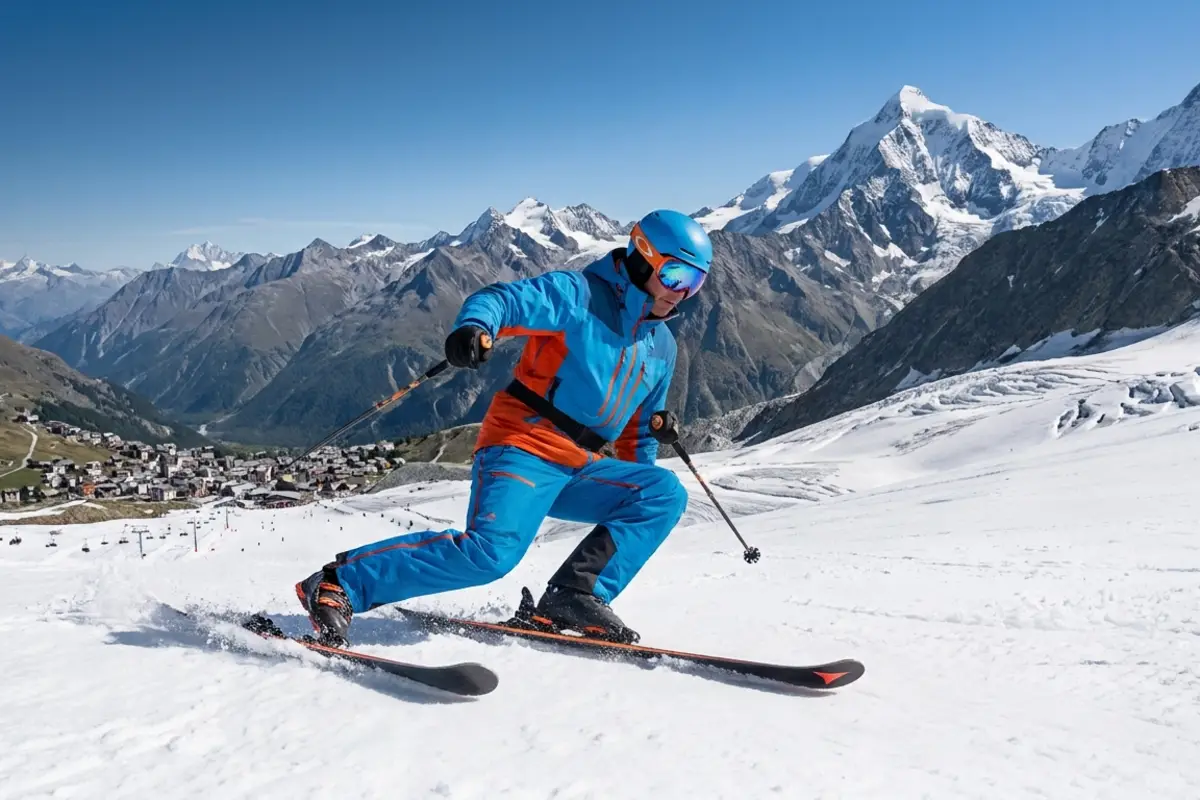
The telemark turn is often described with a certain mystique, a graceful, flowing motion that seems almost dance-like against the stark white of an alpine backdrop. Here in Saas-Fee, you see it on the slopes of the Felskinn and on quiet powder days near the Spielboden—a distinct, powerful genuflection that sets it apart from the parallel turns of alpine skiing.
But this elegance isn’t magic; it’s the result of precise body mechanics, specialized equipment, and a deep understanding of how to work with gravity, not against it. For many alpine skiers, the first attempt at a telemark turn feels profoundly unstable and counterintuitive.
The freedom of the heel, which is the defining characteristic of the discipline, introduces a new axis of movement and balance that must be learned and controlled. This guide is designed to demystify the process, providing a technical framework for what it takes to execute a clean, efficient, and beautiful telemark turn.
We will cover the foundational biomechanics, the specific role of the equipment, and the progressive steps needed to build the muscle memory and confidence required for this unique form of skiing.
The allure of telemark skiing often lies in its perceived connection to the origins of the sport and the added physical challenge it presents. It demands more from the skier’s body in terms of balance, strength, and coordination.
Each turn is a full-body movement, engaging the core, quads, and glutes in a way that alpine skiing does not. This is not simply a different way to get down the mountain; it is a different way to experience the mountain. The connection to the snow feels more direct, more intimate.
The rhythm is different, requiring a continuous flow from one turn into the next. For those who have spent years locked into alpine bindings, learning to telemark is like learning a new language.
The basic goal—descending a slope on skis—is the same, but the grammar, syntax, and expression are entirely new. It is this challenge, combined with the aesthetic appeal of the turn, that draws skiers to “free the heel.”
Our approach is to break down this complex movement into understandable components, making it accessible to anyone with a solid alpine foundation and a willingness to rethink their relationship with the snow.
Understanding the biomechanics of the telemark stance
At the heart of telemark skiing is a unique athletic stance that is both dynamic and stable. Unlike the relatively static, two-footed platform of alpine skiing, the telemark stance is a staggered, lunge-like position that changes with every turn.
This constant transition between leading with the left foot and leading with the right foot is the engine of the telemark turn. Achieving this stance requires a sophisticated interplay of balance, pressure, and edging that must be coordinated with precision.
Without a solid understanding of these biomechanics, a skier will struggle with instability, fatigue, and inefficient turns. The goal is to create a platform that is low, strong, and adaptable to changing terrain and snow conditions, from the groomed pistes of the Morenia to the variable snow off the Längfluh.
The role of weight distribution and pressure control
One of the most common mistakes for new telemark skiers is improper weight distribution. Many instinctively place too much weight on their rear ski, treating it like the tail of a single, long platform. This leads to the rear ski “washing out” or losing its edge, causing a loss of control.
The correct technique involves maintaining a balanced weight distribution between both skis, typically around a 60/40 or 50/50 split, depending on the phase of the turn and the steepness of the slope. The front foot is responsible for steering and initiating the turn, while the back foot provides stability and power. Pressure control is also more nuanced.
Instead of simply pressuring the downhill ski as in alpine turning, a telemark skier must modulate pressure on both the inside edge of the front ski and the inside edge of the rear ski. This dual-edging action is what carves the turn.
Learning to feel and control this pressure distribution is a process of developing sensitivity in the feet and ankles. Drills that focus on isolating the movements of each leg, such as skiing on one ski or making gentle, long-radius turns on a mellow slope, can help build this foundational skill.
Achieving balance through core engagement and posture
Balance in telemark skiing is not passive; it is an active, ongoing process managed primarily through the core. A strong, engaged core connects the upper and lower body, allowing for smooth, coordinated movements.
The ideal posture is athletic and forward-leaning, with the shoulders and hips aligned and facing downhill, a concept known as “counter-rotation.” This upper-body discipline is what prevents the skier from rotating into the turn with their shoulders, a common habit carried over from alpine skiing that leads to instability and loss of edge grip. The hands should be held forward and wide, as if holding a large tray, to aid in balance.
The head should be up, looking ahead to where you want to go, not down at your skis. A low center of gravity is achieved by sinking into the lunge, bending at the knees and ankles, not at the waist. Bending at the waist compromises balance by shifting weight too far forward or backward.
Maintaining this strong, stacked posture—ankles, knees, hips, and shoulders aligned vertically—creates a stable platform from which to initiate and execute powerful, controlled turns. This is particularly important in the variable conditions often found around the Mittelallalin, where unexpected bumps and changes in snow texture can easily throw a less-disciplined skier off balance.
The mechanics of the lead change
The lead change is the defining movement of telemark skiing, the fluid transition from one turn to the next. It is the moment where the rear ski becomes the new front ski and vice versa. A smooth lead change is seamless, efficient, and maintains momentum.
A clumsy one is jerky, tiring, and often results in a loss of balance between turns. The process begins at the apex of the turn. As the skier completes one arc, they begin to extend the old rear leg forward while simultaneously retracting the old front leg.
This movement should be initiated from the hips, not just the legs. It’s a gliding motion, where the new front ski is pushed forward along the surface of the snow. At the same time, the skier transitions their weight and pressure to the new set of edges for the upcoming turn.
The timing of this movement is crucial. Initiating the lead change too early or too late can disrupt the rhythm and flow of the descent. A key feeling to look for is a moment of weightlessness, or “zero-g,” at the transition point between turns.
This is the ideal moment to execute the lead change, as the skis are unweighted and can be moved with minimal effort. Practicing this on gentle, consistent slopes allows a skier to focus solely on the timing and mechanics of the movement without the added pressure of steepness or difficult terrain.
Equipment considerations for telemark skiing
The equipment used for telemark skiing is fundamentally different from alpine gear, and these differences have a profound impact on technique and performance. The “free heel” is the most obvious distinction, but the design of the boots, bindings, and even the skis themselves is specialized for the unique demands of the sport.
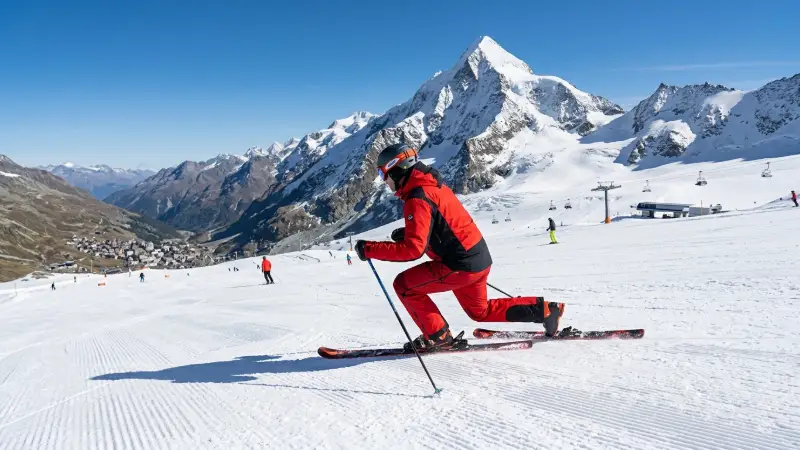
Understanding how this equipment works is not just for gear enthusiasts; it is essential for any skier who wants to progress. The right setup can make learning easier and more enjoyable, while the wrong equipment can be a constant source of frustration and can even hinder the development of proper technique.
Choosing the right gear involves balancing factors like stiffness, weight, and power, and the ideal combination will depend on the skier’s ability level, physical size, and intended use, whether it’s cruising groomed runs or exploring the backcountry terrain accessible from the higher lifts.
Boots and bindings: The heart of the system
Telemark boots and bindings work together as a system to provide both the freedom of movement for the turn and the necessary control to drive the skis. The boots are designed with a flexible bellows section near the ball of the foot, allowing the boot to bend naturally as the skier drops into the telemark stance.
The stiffness of the boot’s plastic and the number of buckles determine how much lateral support and power transmission it offers. Softer, lighter boots are often preferred for touring, while stiffer, more powerful boots are better suited for resort skiing and aggressive carving.
Bindings have evolved significantly over the years. Early designs were simple cable bindings that offered little more than a pivot point. Modern bindings, such as those using New Telemark Norm (NTN) technology, provide much greater lateral rigidity and active edge control and often include safety release features similar to alpine bindings.
These systems connect to the boot underfoot, providing a more direct and powerful connection to the ski. The choice between a more traditional 75mm “duckbill” system and a modern NTN system is a matter of personal preference and skiing style.
NTN generally offers more power and control, which can be beneficial for skiers coming from an alpine background, while some purists prefer the feel and flex of the 75mm system. Getting the right combination of boot and binding is the single most important equipment decision a telemark skier will make.
Choosing the right skis for free-heel performance
While almost any ski can be mounted with telemark bindings, certain ski characteristics lend themselves better to the technique. Because the telemark stance creates a long, stable platform, skiers can often handle a slightly longer ski than they would for alpine skiing. However, a ski that is too stiff can be difficult to bend into a turn from the telemark stance, as the skier’s weight is distributed over a larger area.
A ski with a softer, more forgiving flex, particularly in the tip, can make turn initiation smoother and more intuitive. Skis with a moderate sidecut and waist width (around 90-105 mm) are often a good starting point, as they are versatile enough to handle a wide range of conditions, from hardpack to soft snow.
As a skier’s skills advance, they may opt for more specialized skis—narrower, stiffer skis for carving on firm snow or wider, rockered skis for deep powder. It is also worth noting that the mounting point for telemark bindings is different from that of alpine bindings.
The standard practice is to align the pin line of the binding (or the appropriate mark on an NTN binding) with the chord center of the ski. Experimenting with this mounting position by a centimeter or two forward or back can fine-tune the ski’s performance to better match a skier’s style, but it’s best to start with the manufacturer’s recommendation.
| Binding System | Primary advantage | Best for | Considerations |
|---|---|---|---|
| 75 mm (Duckbill) | Smooth, progressive flex and a more traditional feel. Lighter weight for touring. | Purists, backcountry tourers, and skiers who prefer a softer, more nuanced turn initiation. | Less lateral rigidity and power transmission compared to NTN. Can feel less precise on hard snow. |
| NTN (New Telemark Norm) | Superior power, edge control, and lateral stiffness. Offers safety release features and easier step-in. | Aggressive resort skiers, racers, and those coming from a strong alpine background who want maximum performance. | Generally heavier and more expensive. The flex can feel less progressive or “on/off” to some skiers. |
A progressive approach to learning
Learning to telemark ski is a journey of reprogramming muscle memory. For an experienced alpine skier, many ingrained habits must be unlearned and replaced with new movements. A structured, progressive approach is the most effective way to build a solid foundation and avoid developing bad habits that can be difficult to correct later.
This means starting with the basics in a controlled environment and gradually adding complexity as skills and confidence grow. The gentle, wide slopes accessible from the Stafelwald lifts are an ideal classroom for these initial steps.
The goal is not to be linking perfect turns on the first day but to understand the feeling of the free heel, to find the balance point in the telemark stance, and to begin coordinating the movements of the lead change. Patience is a virtue in this process. Every skier learns at a different pace, and it’s important to focus on quality of movement over speed or steepness of terrain in the early stages.
Foundational drills on gentle terrain
The first day on telemark skis should be spent on the flattest terrain possible. The initial goal is simply to get comfortable with the equipment and the sensation of an unattached heel.
- The static lunge: Before even sliding, practice dropping into the telemark stance while stationary. Focus on maintaining a low, stable position with weight evenly distributed. Do this facing both left and right, getting a feel for the balance points.
- Skating and gliding: On a nearly flat area, practice gliding on one ski at a time, similar to cross-country skiing. This helps develop independent leg action and balance over a single ski.
- Straight runs in a lunge: Find a gentle, straight slope and practice gliding downhill in a fixed telemark stance. Try to hold the stance for as long as possible, focusing on balance and posture without attempting to turn. Switch lead legs on each run.
- The monomark: This is a classic drill where you lift the tail of your rear ski off the snow while gliding in a straight line. It forces you to balance entirely on your front ski and reinforces the idea of keeping weight forward.
These drills may seem basic, but they are the building blocks of the telemark turn. They build the specific muscle strength and balance required before you can start linking turns effectively.
Initiating the first turns
Once you feel balanced and stable in a straight run, you can begin to initiate your first turns. The key is to start with a single, isolated turn rather than trying to link them together immediately.
- Start in a straight glide down a gentle slope in your telemark stance.
- To initiate a turn, gently roll your front ski onto its inside edge by applying pressure with your big toe. At the same time, think about steering the front ski’s tip in the direction you want to go.
- Your rear ski should follow, and you should feel both skis arcing across the fall line. The goal is to make a long, gentle “C” shape, coming to a stop facing uphill.
- Practice this single turn in both directions until you can consistently control your speed and arc. Pay close attention to your upper body, ensuring your shoulders remain level and facing downhill. Many beginners make the mistake of dropping their inside shoulder and hand, which compromises balance.
The focus here is on smooth, deliberate movements. Avoid any sudden or jerky motions. The turn should be guided, not forced. It’s the subtle application of edge and pressure that creates the arc.
Linking turns and finding rhythm
After you can confidently execute a single turn in both directions, the next step is to link them together. This is where the lead change, which we examined earlier, comes into play. The end of one turn becomes the beginning of the next. The rhythm of telemark skiing is a continuous rise and fall, a flowing motion from one lunge into the other.
- As you come to the apex of your first turn, begin the lead change. Smoothly and deliberately slide your rear ski forward to become the new lead ski.
- As the new lead ski moves forward, initiate the new turn by rolling it onto its new inside edge.
- The goal is to make the transition as fluid as possible, without a pause or a moment of instability between turns. It can be helpful to count out a rhythm: “One, two, drop” for each turn.
A common challenge at this stage is managing speed. The continuous flow of telemark turns can generate more momentum than beginners are used to. It’s important to use the shape of the turn to control speed. A more rounded, complete turn across the fall line will scrub more speed than a shallow, quick turn.
As you become more comfortable, you can start to explore different turn shapes and rhythms, adapting your technique to the terrain. This is the stage where personalized feedback is invaluable. An experienced instructor can observe your movements and provide specific corrections to your posture, timing, or pressure control that can dramatically accelerate your progress.
Perhaps you’re not sinking low enough in your stance, or your lead change is happening too late. These are subtle details that are difficult to self-diagnose but make a significant difference in performance. Our approach to telemark ski lessons in Saas-Fee focuses on identifying these individual patterns and providing targeted drills to refine them.
Advanced techniques and terrain adaptation
Once a skier has a solid grasp of the fundamental telemark turn on groomed slopes, a whole new world of possibilities opens up. The true versatility of telemark skiing becomes apparent when you take it into more challenging terrain and variable snow conditions.
Advanced telemarking is about refinement, efficiency, and adaptability. It involves learning to modify the basic turn to suit the situation, whether it’s making quick, dynamic turns in a steep couloir, floating through deep powder, or navigating chunky, tracked-out snow.
This is where the sport becomes truly expressive and where a deep technical understanding allows a skier to move with confidence and grace anywhere on the mountain. The varied terrain around Saas-Fee, from the steep pitches under the Plattjen to the open powder fields of the glacier, provides the perfect environment to develop these advanced skills.
Dynamic and short-radius turns
On steeper terrain, the long, graceful telemark turn is often not practical. The ability to make quick, short-radius turns is essential for controlling speed and navigating narrow spaces. A dynamic short-radius turn requires a more active and athletic lead change. The transition between turns is quicker, with a more powerful extension of the new lead leg. The skier stays lower and more compact, using a strong pole plant to help initiate the turn and maintain rhythm.
The upper body remains quiet and stable, always facing down the fall line, while the legs work quickly underneath. This separation of upper and lower body is a hallmark of expert skiing. Drills for this include practicing hop-telemarks, where the skier makes a small hop to unweight the skis during the lead change, allowing for a very rapid change of direction.
Another useful exercise is to practice turning around a single point, like a glove placed on the snow, forcing a tight and consistent turn radius. Mastering the short-radius turn gives a skier the confidence to tackle steeper, more technical runs.
Adapting to powder and variable snow
Telemark skiing in deep powder is a sublime experience, but it requires a different technique than skiing on hardpack. In powder, the goal is to keep the ski tips up and to maintain momentum. This often requires a more symmetrical and centered stance, with weight more evenly distributed (closer to 50/50) than on groomed snow. The movements should be smooth and continuous, with a distinct “bouncing” or “porpoising” rhythm.
The skier sinks into the snow during the turn and then rises during the lead change, helping to unweight the skis and initiate the next turn. In variable or crusty snow, the challenge is to maintain balance and avoid having the skis deflected by inconsistencies in the snowpack. This requires a strong, stable core and an active, supple lower body that can absorb impacts.
The skier must be proactive, reading the snow ahead and making subtle adjustments to their stance and pressure to stay on top of the changing conditions. The free heel can be an advantage here, as it allows for a greater range of fore-aft movement to absorb bumps.
Experience is the best teacher in these conditions, and a guided session with an instructor who knows the local snowpack can provide invaluable strategies for handling whatever the mountain throws at you.
The path to efficient all-mountain skiing
The ultimate goal for many telemark skiers is to become efficient and effortless all-mountain skiers, able to move smoothly and confidently through any terrain. This level of proficiency comes from thousands of turns and a commitment to continuous refinement.
It involves moving beyond simply executing the mechanics of a turn to developing a deeper feel for the snow and the equipment. An efficient skier uses the energy generated at the end of one turn to help initiate the next, minimizing muscular effort.
They understand how to use the rebound of the ski and the force of gravity to their advantage. Their movements are purposeful and economical. This is where high-level coaching can make a significant difference. At Bespoke Snowsport, our instructors work with advanced skiers to analyze their technique on video, identify small inefficiencies, and prescribe specific drills to create a more powerful and fluid style.
It might involve adjusting the timing of a pole plant, refining the angle of edge engagement, or working on maintaining a more consistent low stance through the entire turn cycle. This is the fine-tuning that transforms a good skier into a great one.
The journey of learning to telemark ski is a rewarding one, full of challenges and breakthroughs. It offers a unique way to connect with the mountains and a lifetime of learning and improvement. The skills developed—balance, coordination, and a nuanced understanding of mountain dynamics—will enrich your entire skiing experience.
Whether you are an experienced alpine skier curious about the free-heel discipline or someone looking to refine your existing telemark technique, our team is dedicated to providing instruction tailored to your specific goals.
We believe that a technical understanding, combined with personalized feedback in a world-class environment, is the fastest path to confident and enjoyable skiing. We invite you to join us on the slopes. Request any of our ski services, whether it be a private or group lesson.