


The decision of when to schedule your ski lesson in Saas-Fee might seem trivial, a simple matter of fitting it into your holiday itinerary. However, the time of day you choose to meet your instructor can profoundly impact your learning curve, your enjoyment, and the overall value you get from the session. It’s a question that balances mountain logistics, snow science, human biology, and personal preference.
The pristine, freshly groomed slopes of the morning offer an entirely different learning environment from the softer, more forgiving snow of the afternoon. Each has its distinct advantages and challenges, and understanding them is the first step toward crafting a truly exceptional ski experience.
As a premier ski school based in the heart of Saas-Fee, we’ve spent thousands of hours on these slopes at every conceivable time of day, in every type of weather. We’ve seen firsthand how a well-timed lesson can unlock a breakthrough for a nervous beginner or help an expert refine a specific technique. This isn’t about declaring one universally “better” than the other.
Instead, it’s about empowering you with the knowledge to make an informed choice that aligns perfectly with your skill level, your goals, and your energy. We’ll explore the unique characteristics of morning and afternoon sessions, delve into the crucial factors that should influence your decision, and provide practical advice for structuring your day.
This is your comprehensive guide to mastering the mountain’s clock and ensuring every moment of your instruction is as productive and enjoyable as possible.
Content
The classic case for morning lessons
There’s a reason the 9 AM lesson slot is a perennial favorite. The allure of the morning is powerful, rooted in the promise of a fresh start, optimal conditions, and peak personal energy.
For many skiers, from first-timers to seasoned veterans, starting the day on the slopes with an instructor sets a positive and productive tone for the rest of their time on the mountain. It’s about seizing the day when the mountain is at its most pristine and your mind is at its sharpest.
The air is crisp, the light is clear, and the slopes are a blank canvas waiting for your tracks. This environment is not just aesthetically pleasing; it provides a tangible technical advantage for learning and development. Let’s examine the specific elements that make a morning lesson such a compelling choice for so many of our clients.
The magic of first tracks and perfect corduroy
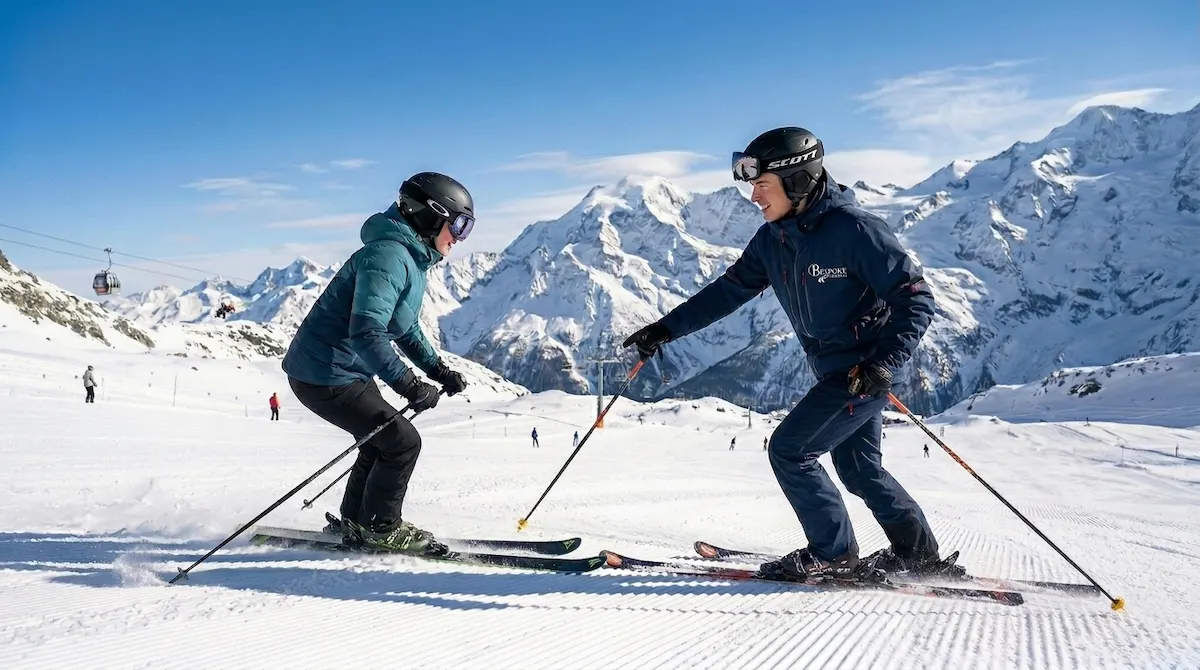
If you’ve ever been one of the first people up the lift, you know the unique satisfaction of looking down at a piste that resembles a perfectly combed carpet of white. This is “corduroy,” the name given to the ribbed pattern left by the grooming machines that work tirelessly through the night. This surface is the skier’s equivalent of a freshly paved racetrack. It’s smooth, consistent, and incredibly predictable.
For learning, this predictability is invaluable. When you’re working on the fundamentals of turning, edge control, or carving, a consistent surface removes variables. You don’t have to worry about navigating around piles of pushed-around snow (moguls in their infancy) or adjusting for unexpected icy patches that have been exposed by skier traffic.
Every turn feels the same, allowing you and your instructor to focus purely on your body mechanics, balance, and timing. The grip is phenomenal, giving you the confidence to lean into your turns and truly feel your skis engage with the snow. For a beginner, this builds confidence rapidly.
For an intermediate skier looking to perfect their carving, there is simply no better surface to practice on. The immediate feedback from the snow—the clean, hissing sound of a perfectly carved arc—is both instructive and deeply rewarding.
A morning lesson gives you the best chance to experience this ideal learning state before the rest of the resort wakes up and churns that perfect canvas into something more complex.
Peak physical and mental energy
Beyond the snow conditions, a morning lesson capitalizes on your body’s natural rhythms. Most people are at their physical and cognitive peak in the morning hours. After a good night’s rest and a proper breakfast, your muscles are fresh, your reaction times are quick, and your ability to absorb new information is at its highest.
Skiing is a demanding sport that requires a constant dialogue between your brain and your body. You’re processing instructions from your coach, analyzing the terrain ahead, and making micro-adjustments to your posture and balance.
When you’re fresh, this entire process is more efficient. Your mind is clearer and less cluttered, making it easier to focus on a specific technical element without distraction. Your body responds more readily to new movements, helping to build muscle memory more effectively.
This is particularly crucial when learning a new skill that feels counterintuitive, as many aspects of skiing do initially. Trying to learn to pressure the downhill ski while your body is tired and your mind is wandering is a recipe for frustration.
By scheduling your lesson in the morning, you are giving yourself the best possible biological advantage. You’ll learn faster, retain more, and be less prone to the small, fatigue-induced mistakes that can lead to falls or a loss of confidence. You also finish your formal instruction with plenty of energy left to practice what you’ve learned for the rest of the day.
Ideal conditions for foundational technique
Combining the perfect corduroy with peak personal energy creates the ultimate environment for building and reinforcing foundational skiing skills. For first-time skiers, the morning offers a calm and controlled setting.
The slopes are generally quieter, providing more space and reducing the intimidation factor of being surrounded by faster skiers. The smooth snow makes the first attempts at a snowplow (or “wedge”) and basic turns much easier, as the skis glide predictably without catching on uneven terrain.
For intermediate skiers, the morning is the time to deconstruct and rebuild technique. If you’re trying to move from skidded parallel turns to clean, carved turns, the grip and consistency of the morning snow are your best friends.
Your instructor can set up drills on a wide, open piste, and you can execute them repeatedly with minimal external variables, allowing you to focus entirely on the precise movements required. This is the time for focused, deliberate practice.
Whether it’s working on pole planting, upper and lower body separation, or fore-aft balance, the pristine morning slopes provide the perfect laboratory for technical refinement. The progress made in a two-hour morning session on perfect snow can often equate to what might take a full day to achieve in more challenging, variable conditions.
The underestimated power of afternoon sessions
While morning lessons have a well-deserved reputation, the afternoon holds a unique and often overlooked appeal. As the day progresses, the entire character of the mountain changes. The sun shifts, the snow transforms, and the rhythm of the resort slows down.
For certain skiers and specific learning objectives, an afternoon lesson can be not just a viable alternative but the superior choice. It’s a time that rewards adaptability, strategic thinking, and a different approach to learning.
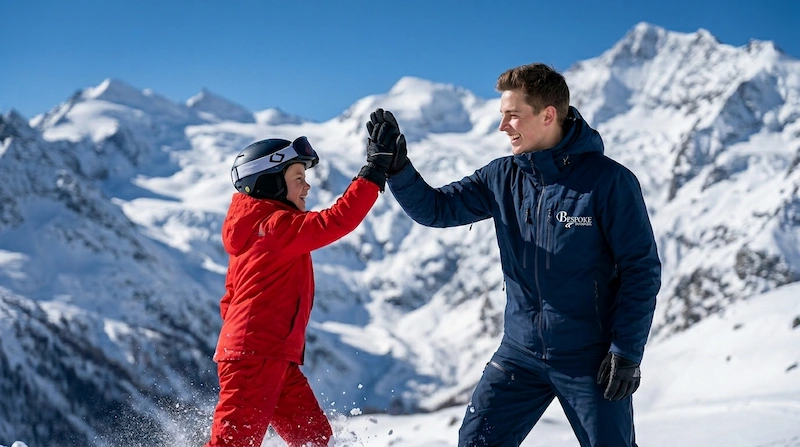
Dismissing the afternoon as a time of “scraped-off” or “heavy” snow is a common mistake. In reality, the conditions can be fantastic, offering a more forgiving and playful environment. The crowds thin out as people break for a late lunch or head down the mountain, creating a more relaxed and spacious atmosphere.
Let’s explore the strategic advantages of embracing a lesson in the latter half of the day, where the benefits are as golden as the late-afternoon light. This is where a deep understanding of Saas-Fee snow conditions becomes a true asset.
Softer snow: a more forgiving canvas
The single most considerable change on the mountain from morning to afternoon is the texture of the snow. Under the influence of the sun and the constant carving of skis, the firm, groomed snow begins to soften.
This process, known as cornification in the spring, happens to some degree on any sunny day. The result is a softer, more pliable snow surface that is incredibly forgiving. For a skier who is nervous or struggling with confidence, this can be a game-changer.
Falling on soft, sun-warmed snow is considerably less intimidating than falling on a firm, fast morning piste. This psychological safety net encourages you to push your boundaries. You become more willing to experiment with your balance, commit to the fall line, and try new movements without the fear of a hard impact. This is one of the key afternoon ski benefits.
Furthermore, softer snow can make initiating turns feel easier. It requires less aggressive edge angulation to get the ski to bite, which can help intermediates who are struggling to transition to more dynamic skiing.
The snow is also less “grabby,” meaning small errors in technique are less likely to result in a ski catching an edge and causing a fall. It’s a wonderfully heroic surface that can make you feel like a better skier, which in turn builds the confidence needed to actually become one.
Finding your rhythm on quieter slopes
There is a distinct lull on the mountain between roughly 1:30 PM and 3:30 PM. The morning rush is over, and many people have stopped for lunch or are beginning to feel the fatigue of a full day.
This is your window of opportunity. The lift lines shorten, and the main pistes become noticeably less crowded. This newfound space is a luxury that can dramatically accelerate learning.
With fewer skiers to navigate, you can focus 100% on your own skiing. You can make wide, sweeping turns from one side of the piste to the other, a crucial exercise for developing good carving technique. Your instructor can have you follow them without the constant worry of being cut off by other mountain users.
The reduced traffic also lowers the mental stress, especially for less confident skiers who find busy slopes overwhelming. This calmer environment allows for better communication between you and your instructor.
You can stop anywhere on the run to discuss a concept or receive feedback without feeling like you’re in the way. This creates a more relaxed, conversational, and ultimately more effective learning dynamic. It transforms the mountain from a busy highway into your private training ground.
The strategic advantage for advanced techniques
While beginners benefit from the forgiving nature of soft snow, advanced and expert skiers can strategically use afternoon conditions to work on specific, high-level skills. Bumps, or moguls, are a perfect example. Icy, morning moguls are notoriously difficult and punishing.
Afternoon moguls, however, are soft and absorbing. They are the ideal training ground for learning the fluid, rhythmic movements of mogul skiing. The soft faces of the bumps allow you to use absorption and extension techniques more effectively, and the forgiving troughs make recoveries from mistakes much easier.
The same principle applies to off-piste and variable terrain. The softer snow makes it easier to handle crud, chop, and other uneven surfaces. It’s an excellent time to work on tactics for skiing powder that has been tracked out or for practicing quick, agile turns in tight spaces like glades or couloirs.
For skiers looking to add more versatility and all-mountain prowess to their skill set, an afternoon session provides the perfect, challenging-yet-manageable conditions. It forces you to be more adaptable, to read the terrain more actively, and to use a wider range of techniques than a perfect groomer ever would. This is where our elite coaching truly shines, turning the afternoon’s “imperfect” snow into the perfect classroom for mountain mastery.
Beyond the clock: factors that truly define your best lesson time
The debate of morning vs. afternoon ski lessons in Saas-Fee is a useful starting point, but the reality is that the optimal time is deeply personal and situational. A truly bespoke approach to ski instruction goes beyond a simple binary choice.
It involves a holistic assessment of the individual skier, the prevailing mountain conditions, and the specific goals of the session. The “best” time is a moving target, influenced by a host of interconnected factors.
At Bespoke Snowsport, we pride ourselves on this personalized approach. Our instructors are trained not just to teach skiing but to act as mountain strategists, helping you align your schedule with your ambitions. Understanding these deeper factors will allow you to have a much more productive conversation with your ski school and ensure you’re not just booking a lesson but designing an experience.
Your skill level as the primary driver
Your current ability on skis is perhaps the most significant factor in determining your ideal lesson time. The needs of a first-timer are vastly different from those of an aspiring instructor or a seasoned off-piste skier.
- First-time beginners: For those who have never put on skis before, the morning is almost always the recommended choice. The combination of quiet slopes, smooth snow, and high-energy levels creates the least intimidating and most productive environment for learning the absolute basics—sliding, stopping, and turning in a wedge.
- Nervous intermediates: This is where it gets nuanced. While the smooth morning snow is good for technical drills, the forgiving nature and quieter slopes of the afternoon can be a huge confidence booster. A great strategy can be to book a mix of sessions to experience both.
- Confident intermediates to advanced skiers: You have the most flexibility. Your choice should be goal-dependent. Do you want to lay down perfectly carved turns? Book a morning lesson to chase the corduroy. Do you want to improve your adaptability and learn to handle variable snow? The afternoon is your playground.
- Experts and professionals: For this group, the lesson time is purely a strategic tool. It could be an early morning session to train on a firm, race-like surface, or a late afternoon lesson to find challenging, chopped-up snow to work on power and absorption. The lesson is scheduled to find the specific conditions needed to achieve a very precise goal.
How seasonality and weather patterns influence the decision
Saas-Fee’s high-altitude, glacial environment means conditions can vary dramatically not just day-to-day, but season-to-season. Smart ski school scheduling takes this into account.
- Early season (December – January): In the heart of winter, the sun is lower in the sky and has less power. The snow stays colder and drier for longer. During this period, the difference in snow quality between morning and afternoon is less pronounced. Afternoon snow will be more skied-off, but it won’t necessarily be the heavy, wet snow you might find in spring. Your decision can be based more on energy levels and crowd avoidance.
- Late season (March-April): This is when the timing of your lesson becomes absolutely critical. The strong spring sun and warmer temperatures create a distinct daily freeze-thaw cycle. Mornings offer firm, fast “spring hardpack,” which can be excellent for carving. As the sun works its magic, this transforms into a beautiful, silky layer of “corn snow” in the afternoon—a hero surface beloved by many experienced skiers. A lesson timed for mid-afternoon can be a sublime experience, but timing it too late can mean skiing in overly heavy, sticky slush. This is where local knowledge of aspect and altitude and understanding glacier skiing times on the Allalin become indispensable. The glacier often holds better, colder snow for longer into the day.
- Weather of the day: A cloudy, overcast day will preserve the snow quality for much longer than a bluebird, sunny day. On a storm day with fresh snowfall, the “best” time is whenever you can get out safely to enjoy the powder. An instructor can show you the best places to find untracked snow, a lesson that is valuable at any time of day.
Aligning your lesson time with personal ski goals
Ultimately, your lesson should serve your personal objectives. Before you book, ask yourself, “What do I want to achieve?”
- Goal: build confidence: If your primary aim is to feel more comfortable and overcome fear, a quiet afternoon on soft snow is often the perfect recipe. The reduced pressure and more forgiving surface create a positive feedback loop that builds self-assurance.
- Goal: technical purity: If you are focused on achieving a specific technical outcome, like a perfectly symmetrical carved turn or a more efficient pole plant, the consistent and predictable surface of a morning groomer is unmatched. It provides the controlled environment needed for meticulous, focused practice.
- Goal: all-mountain versatility: If you want to become a skier who can handle anything the mountain throws at them, you need to practice in varied conditions. Booking a series of afternoon lessons will expose you to bumps, crud, and softer snow, rapidly expanding your tactical toolbox and making you a more adaptable, resilient skier.
- Goal: family fun: For families, the decision often revolves around managing energy levels, especially for young children. A morning lesson for the kids when they are at their most energetic, followed by an afternoon for the parents, can be an effective strategy. Alternatively, a whole-family lesson in the late morning can be a great compromise before breaking for lunch together. The best time for ski lessons is the one that fits the family’s rhythm.
The perfect time for your ski lesson isn’t a universal formula; it’s a personal equation. It’s about understanding the mountain’s daily rhythm and aligning it with your own.
Whether you crave the crisp precision of a morning on fresh corduroy or the forgiving freedom of a sun-softened afternoon slope, the right choice is the one that empowers you to ski with more confidence and joy. Our expertise lies not just in refining your technique, but in helping you navigate these decisions to craft an experience that is truly your own.
Ready to find your perfect time on the slopes of Saas-Fee? Our team is here to help you design the ideal ski experience, tailored to your goals and schedule. Reach out to us to request any of our ski services, whether it be a private or group lesson, and let’s start planning your adventure.